
Thermography
Thermographic surveys to reveal heat loss and defects
With thermography (thermographic surveys), TOPO4D accurately maps temperature differences in buildings and installations. Using a thermal imaging camera (infrared camera), we detect heat loss, thermal bridges, moisture problems and technical defects that remain invisible to the naked eye.
A thermographic measurement (also called an infrared scan) provides quick and objective insight into the condition of a building or installation. The result: a valuable basis for analysis, maintenance and energy optimisation, without destructive testing or downtime of your installation.
What is thermography?
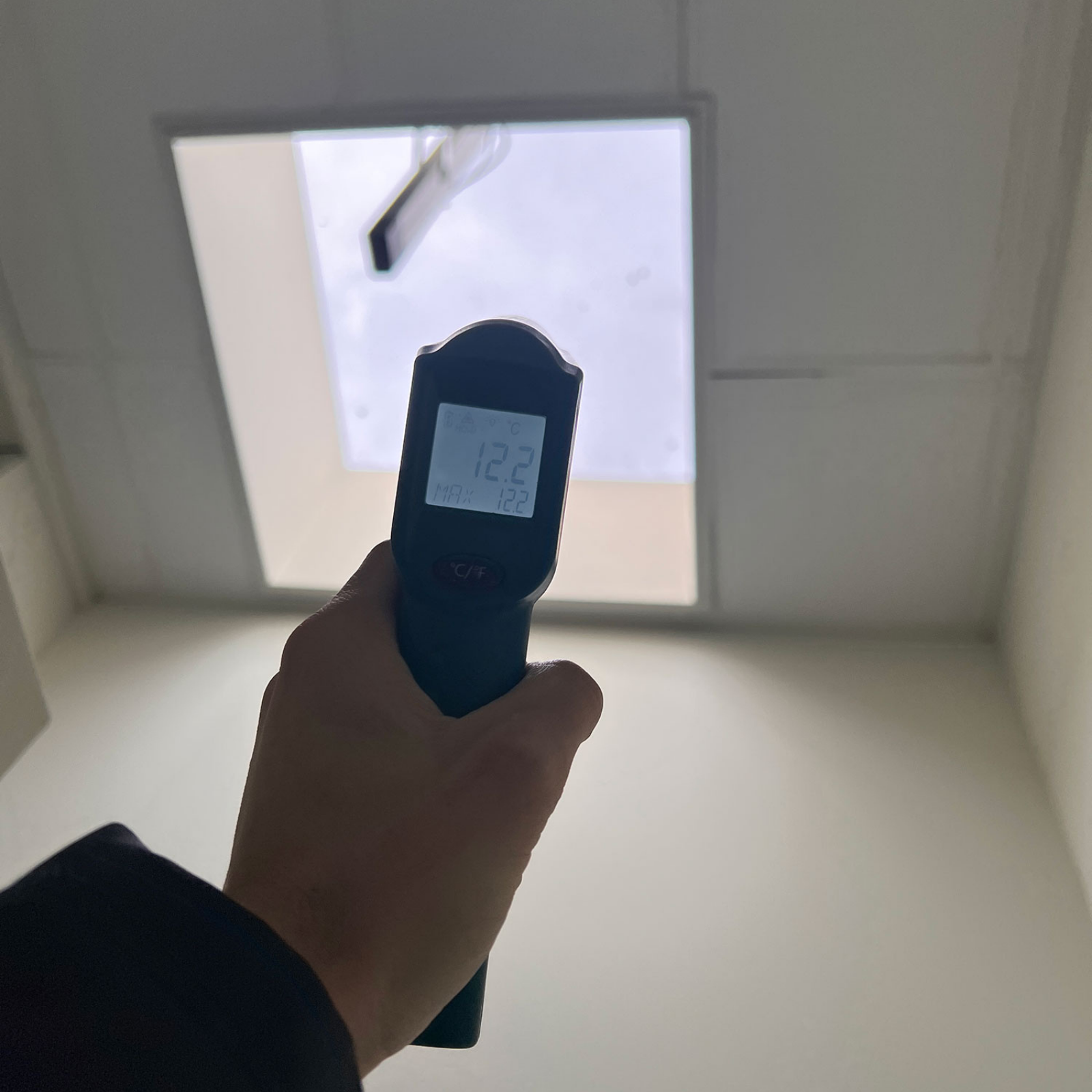
Thermography is a measurement method in which infrared radiation is converted into a visual thermal image. A thermographic camera records temperature differences on surfaces, revealing anomalies that cannot be seen with the naked eye. Think of heat loss in a facade, overheating in an electrical installation or a faulty solar panel.
The measurements can be carried out from the ground or from the air. For large or hard-to-reach areas, we deploy a drone inspection where relevant. This allows us to inspect larger surfaces quickly, safely and without contact.
Thermography is particularly suitable for preventive maintenance, energy analysis and the early detection of defects. When the geometry or structure also needs to be accurately mapped, this can be supplemented with 3D laser scanning.
What can you detect with a thermographic survey?
A thermographic inspection can be used for various applications. By making temperature differences visible, we quickly gain insight into possible problems with buildings, installations and solar panels.
Heat loss and insulation problems
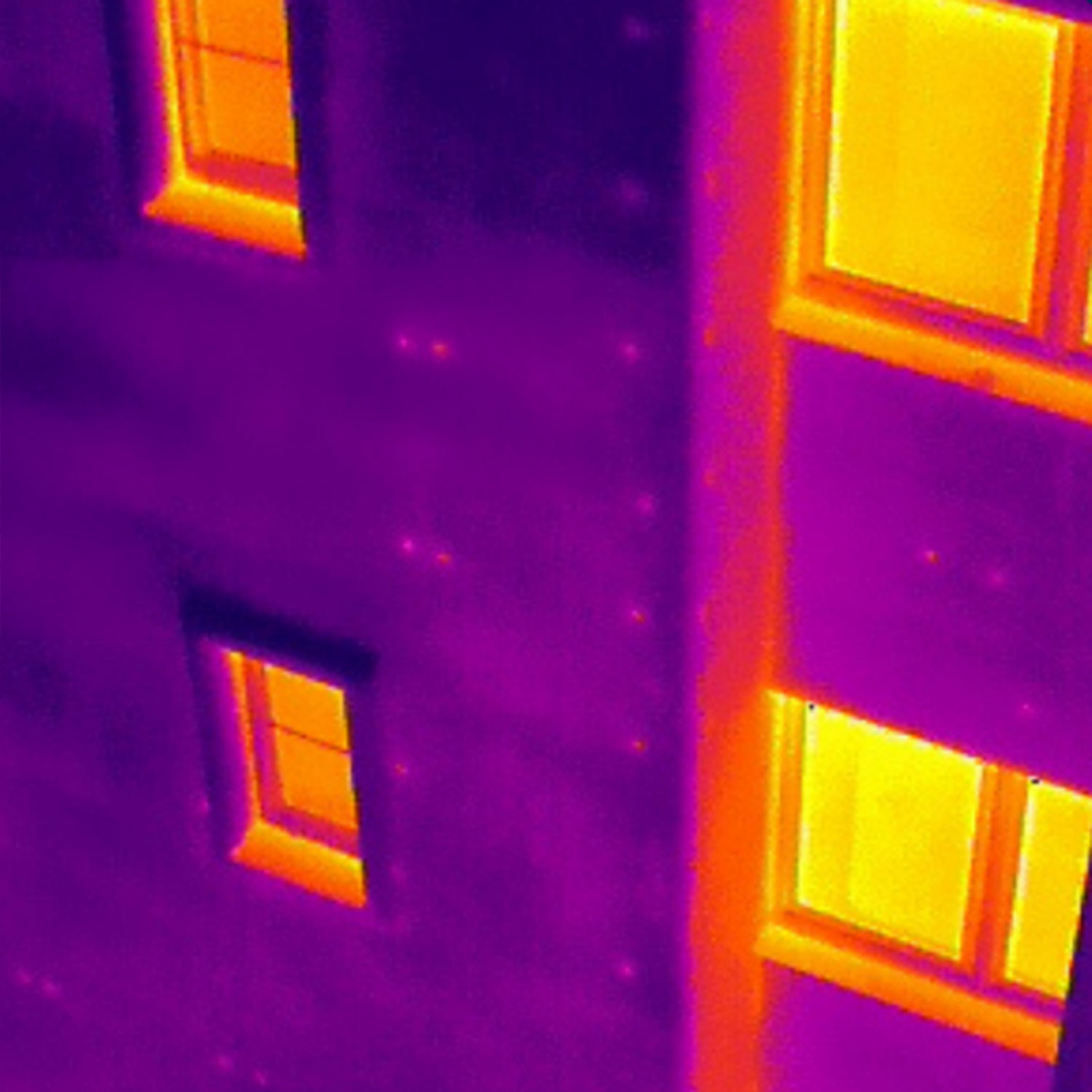
With thermography, we map temperature differences in roofs, facades and other building elements. This reveals zones with possible heat loss or poor insulation, helping to determine precisely where further investigation or improvement is needed.
Thermal bridges
Thermal bridges are places where heat escapes faster than through the surrounding structure. A thermal imaging camera can clearly visualise these zones, giving you better insight into possible weak points in the building envelope.
Moisture problems and leaks
Moisture and leaks can cause abnormal temperature patterns in walls, ceilings or floors. Thermography helps to locate potential problem areas more precisely. This makes further investigation more targeted and limits unnecessary breaking work.
Electrical installations
Overloading, poor connections or defective components can produce extra heat locally. A thermographic survey can detect such anomalies at an early stage. This makes thermography useful for preventive inspection and maintenance of electrical installations.
Solar panels
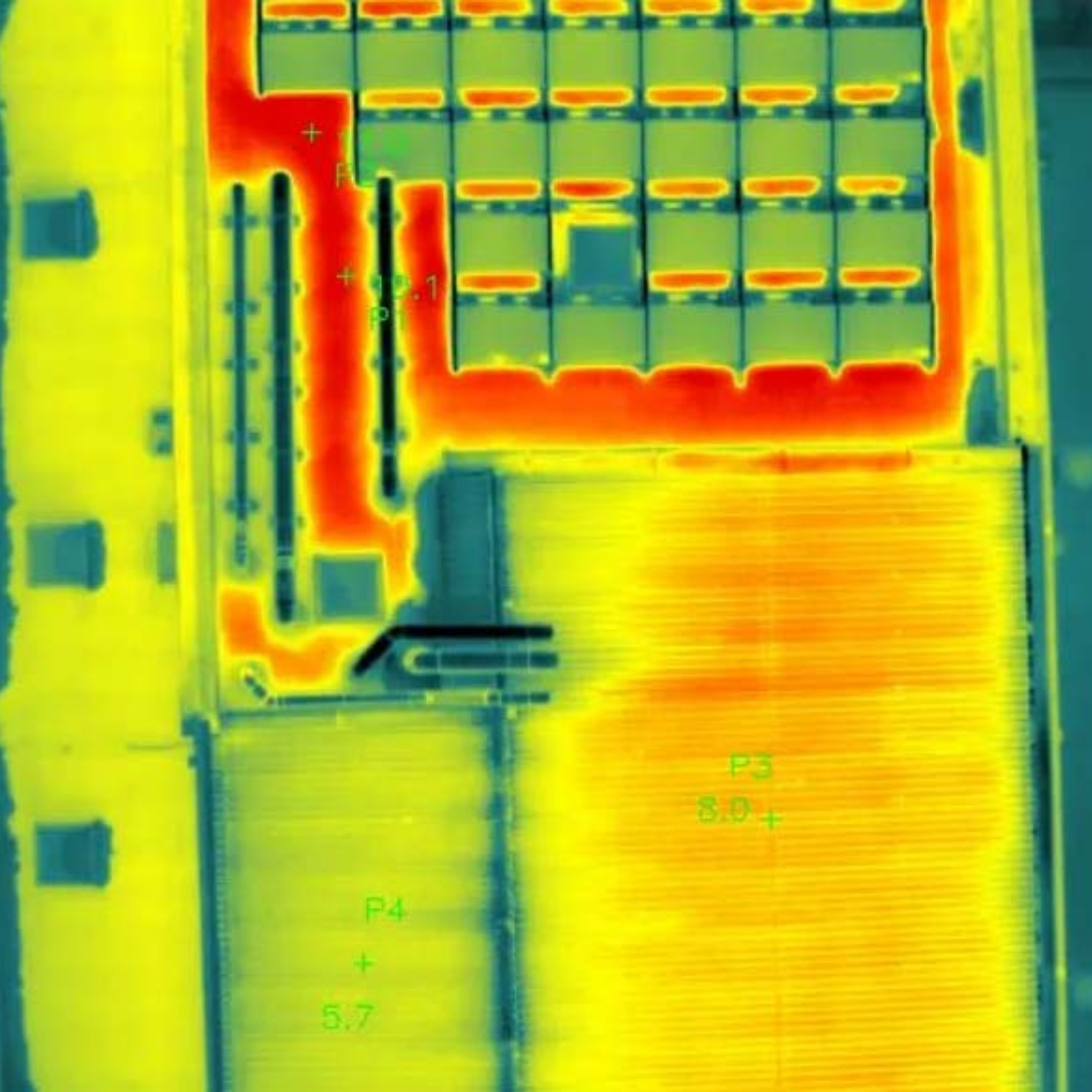
Defective or underperforming solar cells can show an abnormal heat pattern. With solar panel thermography, problem areas can be detected quickly and efficiently. For larger installations, this can also be done from the air with a thermographic drone.
Which inspection do you need?
From a house to an industrial roof full of solar panels: tell us what you want to investigate and we will propose the right approach.
What are the benefits of a thermographic survey?
Thermography makes it possible to collect a lot of information quickly without breaking open a structure or installation.
The main benefits are:
- Contactless measurement: the temperature is measured remotely.
- Non-destructive testing: problems can be located without immediately breaking open walls, floors or installations.
- Fast inspection of large surfaces: especially in combination with drones, large areas can be investigated efficiently.
- Early detection of problems: thermal anomalies can become visible before they lead to larger defects, energy loss or damage.
- Objective measurement data: the results are captured in thermographic images and processed into a clear report.
How does a thermographic inspection work?
01
Preparation
First, we look at which problem or installation needs to be investigated and which measurement method is suitable.
02
Planning
Temperature differences and environmental factors influence thermographic measurements. That is why we determine in advance when and how the inspection is best carried out.
03
Measurement
Our thermographer captures the relevant surfaces or installations with a professional thermal imaging camera. For large or hard-to-reach areas, a drone can be used.
04
Analysis
A thermogram alone does not tell the whole story. That is why we analyse the measured temperature differences and investigate which anomalies are relevant.
05
Reporting
After the survey, you receive a clear report with the relevant thermal images, identified anomalies and a clear explanation. Where relevant, we can provide additional data, such as flight information, maps or calculations.
Drone thermography for large and hard-to-reach surfaces
Not every structure can easily be inspected from the ground. That is why TOPO4D uses drone thermography for large, high or hard-to-reach areas.
A drone equipped with a thermographic camera captures thermal images from the air. This allows us to investigate large surfaces in a short time without scaffolding, aerial work platforms or unnecessary risks.
This approach is particularly suitable for large roofs, commercial buildings, industrial sites, facades, infrastructure and solar panels or solar parks. Depending on the assignment, the thermographic aerial images can also be combined with other drone inspections and survey methods.
How much does a thermographic survey cost?
The cost of a thermographic survey depends on several factors, such as the size and accessibility of the building or installation, the number of zones to be inspected and the required reporting. The inspection method also plays a role. For large roofs, solar panels or hard-to-reach structures, a drone can be used, for example.
An exact price for your thermographic survey?
Because every situation is different, TOPO4D works with a tailored quote. This way, you only pay for the measurements and analysis that are relevant to your project.
Why clients choose TOPO4D

Certified thermographers
TOPO4D works exclusively with certified thermographers holding a Level 2 certification. This ensures that the measurements are carried out correctly and interpreted technically accurately.
Professional measuring equipment
We work with professional thermographic cameras and analysis tools. This allows us to accurately map temperature differences and clearly distinguish relevant anomalies.

Well-founded reporting
After each inspection, you receive a clear thermographic report with thermal images, analysed zones and a clear explanation of the findings. Where relevant, we add extra output, such as maps, flight paths or calculations.
More than thermography
When a one-off inspection is not sufficient, thermography can be combined with monitoring or other survey methods. This way, critical installations or infrastructure can also be followed up in the longer term.
They went before you













Frequently asked questions about thermography
What does thermography mean?
Thermography literally means imaging heat. A thermographic camera records infrared radiation and converts temperature differences into a visual thermal image.
When is the best time to carry out a thermographic measurement?
For the most reliable results, we preferably measure during the colder months, when there is sufficient temperature difference between inside and outside, and without direct sunlight on the surface being investigated.
What can and can't thermography detect?
Thermography shows temperature differences on the surface and is therefore very suitable for detecting thermal bridges, heat loss, moisture problems and overheating. However, the technique does not show how thick an insulation layer is or what type of insulation material was used; that requires additional investigation.
Is thermography harmful to my building or installation?
No. Thermographic inspections are completely contactless and non-destructive. Your installation can continue to operate normally during the measurement.
What are the disadvantages of thermography?
Thermography provides a lot of information, but the results depend on the conditions in which the measurement takes place. Sunlight, wind, rain, outside temperature and the type of material can influence the thermal image.
In addition, thermography mainly shows temperature differences on the surface. An anomaly does not always immediately reveal the exact cause. Correct interpretation by an experienced thermographer and, where necessary, additional investigation therefore remain important.
Is a thermographic survey of an electrical installation mandatory?
A thermographic survey is not legally required by default for every electrical installation. Depending on the installation, the type of infrastructure, the risk analysis or the conditions of an insurer, for example, additional thermographic checks may be required or recommended.
What is the difference between mammography and thermography?
Mammography and thermography are two different techniques. Mammography is a medical imaging technique, while thermography visualises temperature differences on a surface.
Ready to gain insight where the naked eye falls short?
Want to map hidden heat loss or technical problems without unnecessary risks or interventions? With thermography from TOPO4D, you gain objective insight into the thermal condition of buildings and installations. We work safely, accurately and with clear reporting, complemented by professional advice.
"*" indicates required fields